

As sustainability becomes a priority across industries, the rubber recycling market is experiencing unprecedented growth. This comprehensive guide walks through the entire rubber recycling process while highlighting the specialized machinery that makes each step possible – all while incorporating valuable insights for businesses looking to enter this expanding sector.
Stage 1: Collection and Pre-Processing
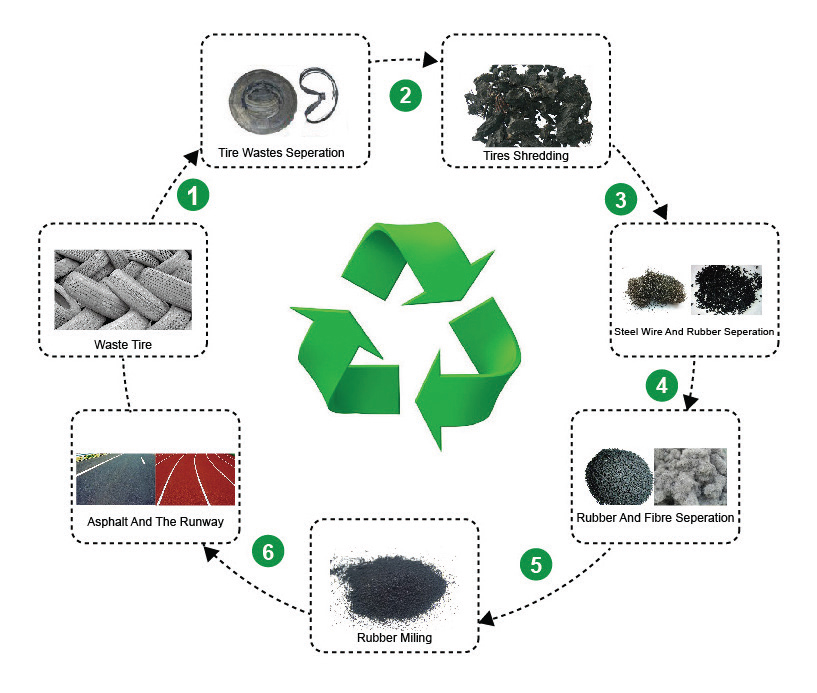
The journey begins with collecting end-of-life tires and rubber products, which are then transported to recycling facilities. Here, industrial tire shredders first reduce whole tires into manageable 50-200mm pieces. Advanced sorting systems using AI-powered visual recognition help separate different rubber types and remove large contaminants. Many modern facilities now use RFID tagging systems to track batches throughout the entire recycling process.
Stage 2: Size Reduction and Refinement
The shredded material moves to secondary processing where powerful granulators further break down the rubber into 1-10mm crumb rubber particles. For applications requiring ultra-fine powder, cracker mills with adjustable grinding plates can achieve particles as small as 0.5mm. The latest models feature automatic gap adjustment and real-time particle size monitoring to ensure consistent output quality.
Stage 3: Contaminant Removal
Specialized separation equipment then cleans the rubber material. High-intensity magnetic separators extract up to 99% of steel wires from tire rubber, while advanced air classification systems remove textile fibers and other non-rubber materials. Some facilities are now implementing electrostatic separation technology for even higher purity levels exceeding 99.5%.
Stage 4: Devulcanization (For Premium Applications)
For manufacturers needing recycled rubber that performs like virgin material, modern devulcanization systems use either thermo-mechanical or chemical processes. Continuous screw extruders with precisely controlled temperature zones can efficiently break sulfur bonds without damaging the rubber polymer chains. Some next-generation systems even incorporate microwave-assisted devulcanization for improved energy efficiency.
Stage 5: Reprocessing and Manufacturing
The final stage transforms the recycled rubber into new products. Hydraulic presses mold rubber crumbs into durable mats and tiles, while specialized extruders produce rubber-modified asphalt additives. For manufacturers requiring compound customization, mixing mills can blend recycled rubber with virgin materials and additives to achieve specific performance characteristics.
Emerging 2025 Technology Trends
The rubber recycling industry is rapidly evolving with several key developments:
- AI-powered optical sorting systems that automatically classify rubber types and contaminants with over 95% accuracy
- Modular, containerized recycling systems that enable decentralized processing
- Advanced pyrolysis technologies that recover high-value carbon black and oil from rubber waste
- IoT-enabled equipment that provides real-time process monitoring and predictive maintenance
Key Considerations When Selecting Equipment
Businesses entering rubber recycling should evaluate:
- Throughput requirements (1-20 ton/hour systems available)
- Desired output particle size and purity levels
- Available facility space and power infrastructure
- Local regulations regarding emissions and waste handling
With the global push toward circular economies, rubber recycling presents significant opportunities. Modern recycling systems can typically achieve ROI within 2-3 years while meeting increasingly stringent environmental standards. Whether processing waste tires, industrial rubber scrap, or post-consumer products, today’s advanced equipment delivers efficiency and profitability previously unattainable in this sector.
For operations looking to optimize their rubber recycling processes, consulting with experienced equipment providers can help identify the ideal machinery configuration for specific material streams and end-product requirements. Many suppliers now offer pilot testing services to validate processes before making major capital investments.
The rubber recycling industry continues to innovate, with new technologies emerging to improve efficiency, reduce energy consumption, and create higher value products from recycled rubber materials. Staying informed about these developments can help recyclers maintain a competitive edge in this growing market.
