

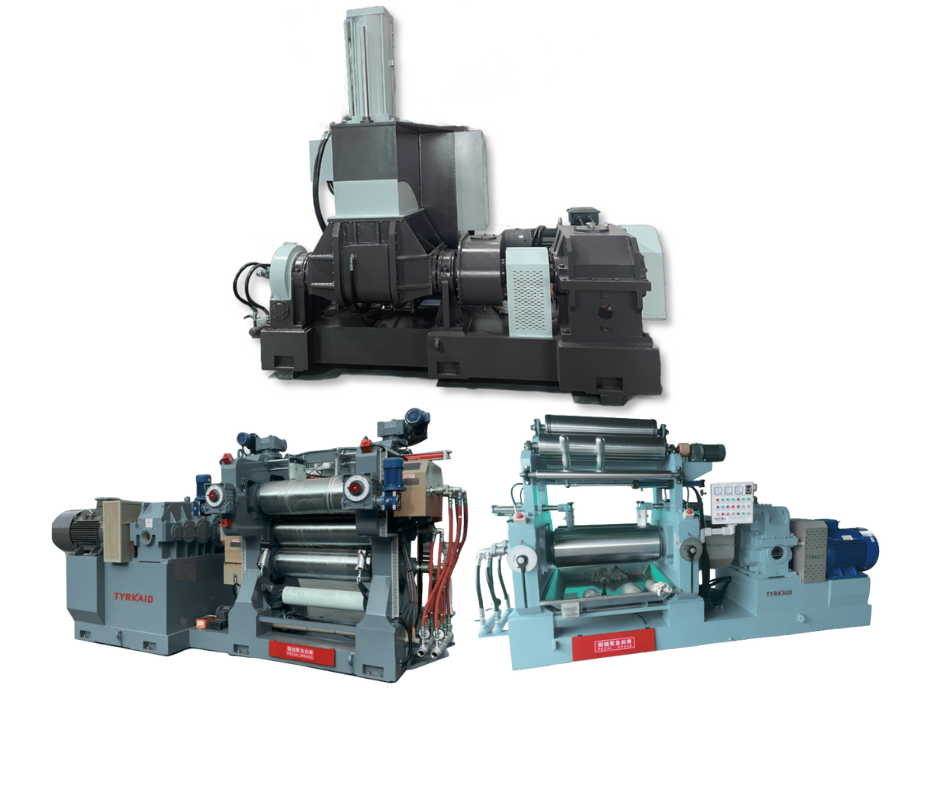
In the rubber compounding industry, selecting the right mixing equipment is crucial for achieving optimal rubber mixing efficiency, product consistency, and cost-effectiveness. Two of the most widely used machines are the Banbury mixer and the internal mixer, each offering distinct advantages depending on production requirements. This article compares their features, benefits, and applications to help you make an informed decision for your rubber mixing process in 2025.
1. Overview of Banbury Mixers
The Banbury mixer, a type of internal mixer for rubber industry, is renowned for its high-intensity mixing capabilities. It features a closed chamber with rotors that generate strong shear forces, ensuring excellent carbon black dispersion in rubber and uniform compound quality. Key benefits include:
- High-volume production – Ideal for large-scale rubber compounding technology in tire and industrial rubber manufacturing.
- Energy-efficient mixing – Advanced designs reduce energy consumption in rubber mixing, lowering operational costs.
- Precise temperature control – Critical for maintaining rubber mixing temperature control and preventing premature vulcanization.
However, Banbury mixers require significant capital investment, making them more suitable for high-output facilities.
2. Overview of Internal Mixers (Non-Banbury Types)
Generic internal mixers offer flexibility for smaller batches and specialized compounds. Unlike Banbury mixers, they often have customizable rotor designs and are adaptable for sustainable rubber mixing solutions, including recycled rubber processing. Advantages include:
- Versatility – Suitable for rubber mixing for silica-filled compounds and other advanced materials.
- Lower initial cost – More accessible for mid-sized manufacturers evaluating rubber mixing machine price factors.
- Easier maintenance – Simplified designs aid in rubber mixing troubleshooting and reduce downtime.
However, they may lack the mixing efficiency improvement seen in Banbury systems for high-shear applications.
3. Key Comparison: Which One Fits Your Needs?
When deciding between a Banbury mixer vs. internal mixer for rubber compounding, consider these factors:
- Production Scale – Banbury mixers excel in tire manufacturing and mass production, while internal mixers suit pilot plants or rubber mixing for EV tires development.
- Material Compatibility – Banbury systems dominate high-speed mixing, whereas internal mixers adapt better to silicone rubber or specialty compounds.
- Automation Needs – AI-driven rubber mixing optimization and IoT-enabled monitoring are increasingly integrated into both, but Banbury mixers often lead in smart mixing systems for rubber industry 2025.
4. Future Trends: Automation and Sustainability
The industry is shifting toward energy-efficient rubber compounding machines and rubber mixing with reduced carbon footprint. Innovations like automated rubber mixing lines and AI-powered process control are becoming standard, regardless of mixer type.
Conclusion
For rubber compounding technology in 2025, both Banbury and internal mixers have critical roles. Large-scale operations prioritizing rubber mixing efficiency improvement may prefer Banbury systems, while smaller or R&D-focused facilities might opt for flexible internal mixers. Evaluate your rubber mixing process needs, cost of rubber mixing equipment, and sustainability goals to choose wisely.
Explore our range of advanced mixing solutions designed to meet rubber industry automation and sustainable rubber mixing demands. Contact us to optimize your rubber mixing temperature effect on vulcanization and more!
