

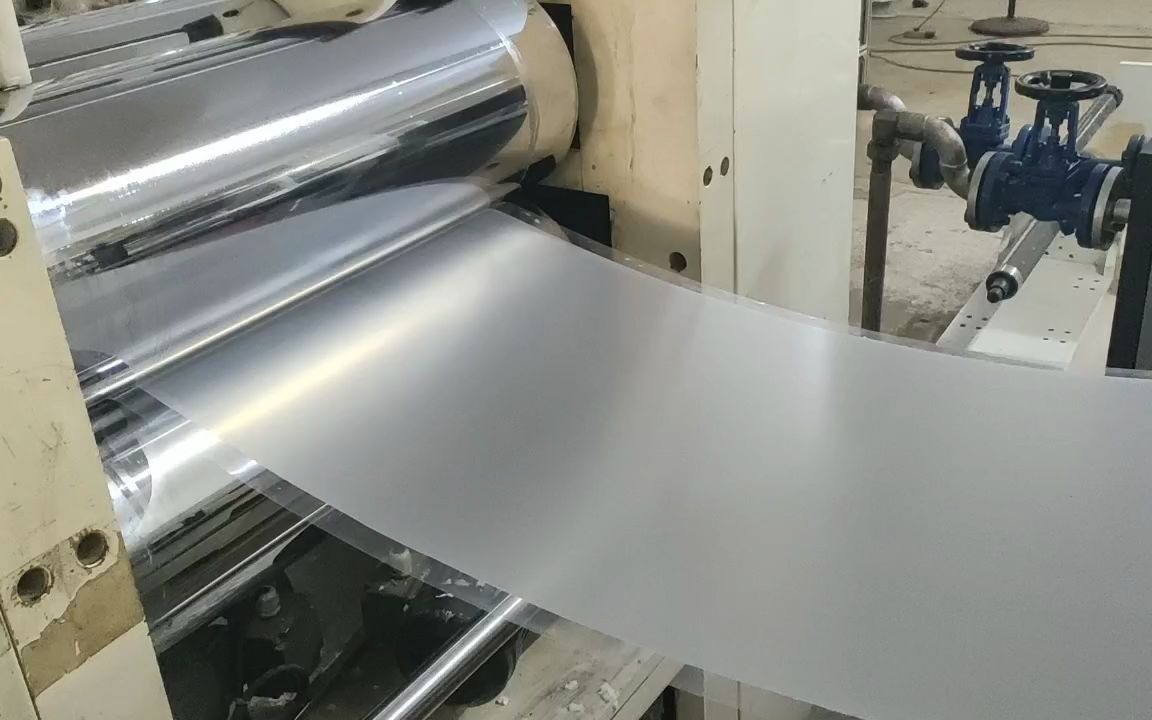
In the world of rubber manufacturing, achieving a uniform sheet with precise thickness and a superior surface finish is critical. The calendar machine is the cornerstone of this process. However, not all calendars are created equal. Understanding the differences between 2-roll, 3-roll, and 4-roll calendars is essential for optimizing your production line for efficiency, cost, and product quality.
The Versatile 2-Roll Mill / Calendar
Often referred to as a two-roll mill, this machine is a workhorse in many rubber factories. Its primary applications include:
- Sheeting: Converting a mixed rubber compound into a continuous sheet.
- Warming & Pre-forming: Heating and softening the compound before it enters a more precise calendar.
- Mixing & Blending: While less efficient than an internal mixer, it is excellent for small batches or adding final additives.
The 2-roll mill is prized for its simplicity, lower cost, and ease of operation. It is a versatile and fundamental piece of rubber processing equipment for many general-purpose tasks.
The Efficient 3-Roll Calendar
The 3-roll calendar introduces an additional roll, significantly enhancing control over the final product. It is predominantly used for:
- Precision Sheeting: Producing rubber sheets with more consistent thickness and a smoother surface finish than a 2-roll machine.
- Frictioning: A key process where fabric or cord is passed through the top nip at a speed differential, forcing the rubber compound into the textile weave. This is vital for manufacturing reinforced rubber products like tires and conveyor belts.
This type of rubber machinery offers a excellent balance between capability and investment, making it a popular choice for mid-range production needs.
The High-Precision 4-Roll Calendar
For top-tier quality and complex products, the 4-roll calendar is the ultimate solution. Its “Z-type” or “S-type” roll configuration provides unparalleled stability and control. Key applications include:
- Double-Sided Topping or Sheeting: Simultaneously applying a rubber coating to both sides of a fabric substrate in a single pass. This drastically improves production efficiency for products like PVC diaphragms, inflated rubber products, and high-grade conveyor belting.
- Ultra-Precise Thickness Control: The four-roll design minimizes roll deflection, ensuring exceptional gauge uniformity across the entire sheet width.
- Laminating: Combining multiple layers of different rubber compounds or materials.
While representing a higher initial investment, the 4-roll calendar is indispensable for high-volume, high-precision rubber manufacturing.
Choosing the Right Rubber Calendar Machine
Your choice depends entirely on your product portfolio and quality requirements. A 2-roll mill is perfect for general sheeting and preparatory work. A 3-roll calendar is ideal for precision sheeting and frictioning applications. For the most demanding, high-efficiency tasks like double-sided coating, the 4-roll calendar is unmatched.
As a leading manufacturer of rubber mixing machinery, including calendars, we Tyrkaid provide expert guidance to help you select the perfect equipment for your factory. Contact us today for a consultation to boost your production capabilities.
